
Crystals 101: A Beginner’s Guide
Published · by DND Applications
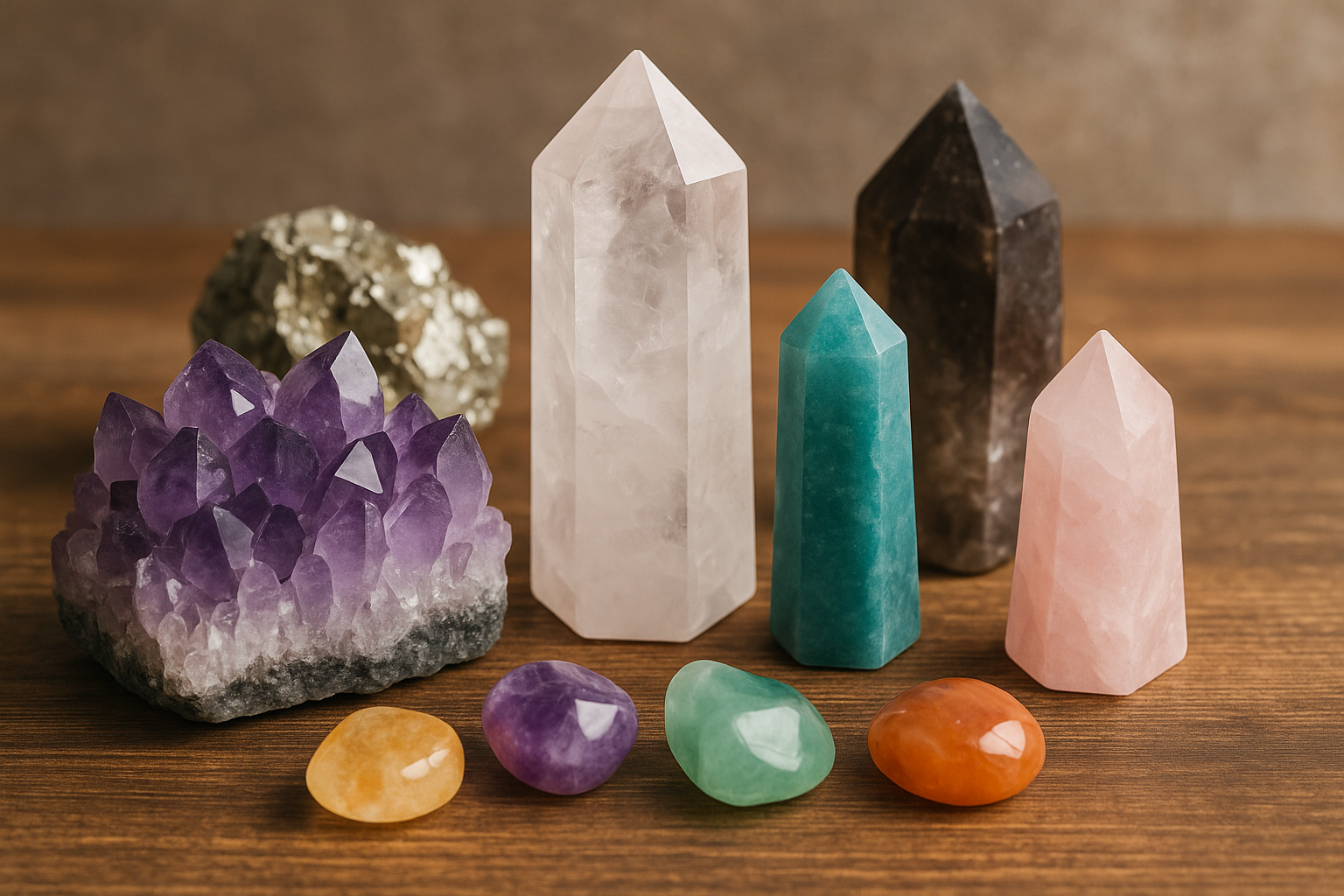
Crystals are captivating not only for their color and form, but also for the way they connect geology, culture, and craft. If you are just getting started, this guide covers the essentials: common types, how to evaluate quality, ethical sourcing, everyday uses, and simple care tips, so you can build a collection you love.
What are crystals?
In geology, a crystal is a solid whose atoms are arranged in a repeating, ordered structure. This structure influences familiar traits like hardness, cleavage, and luster. Quartz, feldspar, and calcite are among the most abundant minerals in Earth’s crust, and many beloved gemstones are variations of these families.
Popular crystal types
- Quartz family (clear quartz, amethyst, citrine, rose quartz): durable, widely available, easy to care for.
- Feldspars (moonstone, labradorite): known for shimmer or labradorescence.
- Carbonates (calcite, malachite): striking patterns and bands; softer; handle with care.
- Beryls (emerald, aquamarine, morganite): prized colors, typically higher value.
Evaluating quality
Clarity, color saturation, and uniformity are key. Natural inclusions are common; seek pieces without distracting cracks through the center. For carvings and points, check that edges are crisp and polish is even.
Ethical and mindful sourcing
Ask vendors about mine origin and supply chain practices. Prefer sellers who disclose treatments (heat, dye) and who work with responsible wholesalers or directly with small, transparent mines.
Care and handling
- Cleaning: Most quartz can be rinsed in lukewarm water and dried with a soft cloth.
- Storage: Keep softer minerals (like calcite, fluorite, selenite) separate to avoid scratches.
- Sunlight: Some crystals (amethyst, rose quartz) may fade with prolonged UV exposure.
Everyday uses
People enjoy crystals as decor accents, in jewelry, and as teaching tools for kids learning about geology and the natural world. However you engage, treat your collection with curiosity and care.
Starting your collection
Begin with a few well-chosen pieces that speak to you, perhaps clear quartz, amethyst, and a feldspar like labradorite. Record where you bought them and any details about origin or treatments. Over time, you’ll develop an eye for quality and the types you love most.
Beginner toolkit
- Soft microfiber cloths for cleaning and handling
- Small loupe (10x) to inspect inclusions and polish
- Labels or cards to note name, source, and any treatments
Sourcing checklist
- Ask about origin and whether any treatments were applied
- Inspect for cracks in stress points and uneven polish
- Buy from sellers with clear return policies and transparency
Care quick reference
| Type | Hardness | Notes |
|---|---|---|
| Quartz | ~7 | Durable; mild soap and water |
| Calcite | ~3 | Soft; avoid abrasion and acids |
| Fluorite | ~4 | Scratch-prone; separate storage |
Explore crystals with Crystalia
Start your first collection and learn properties wherever you are.


